Madrid Theatre in Canoga Park: A Century of Local Stage History |
The Sherman Way landmark reflects a changing West Valley and awaits its next chapter after renovations |
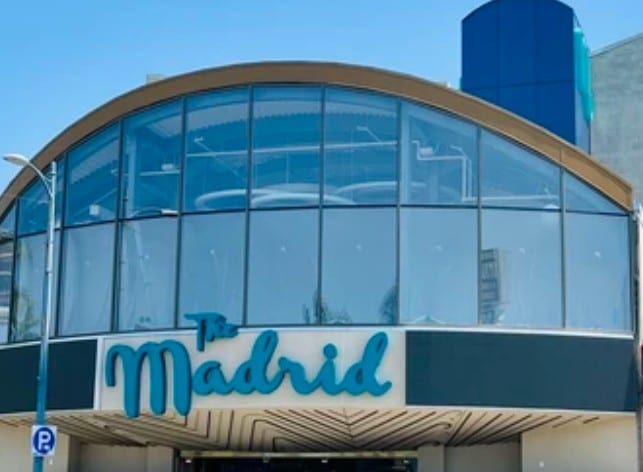
Anyone walking along Sherman Way in historic downtown Canoga Park encounters evidence that the western San Fernando Valley had a cultural life long before today's multiplexes and large shopping destinations.
The Madrid Theatre at 21622 Sherman Way is one of the most recognizable reminders, a building whose changing uses mirror changing generations of local audiences.
The city describes the property as a 290-seat performing arts theatre, but readers planning a visit need to know the crucial current detail: it is closed for renovations.
That closure means the theater should be treated as a historical landmark and a subject of civic interest, not advertised as a destination with performances this weekend.
Its past helps explain why residents have reason to care about what happens next, even when they have never attended a show inside.
The building began in 1926 as a silent motion picture house, when this portion of the Valley was associated with the town name Owensmouth.
At the time, the theater accommodated a substantially larger audience and featured an elaborate organ supplied by a manufacturer based in Van Nuys.
Film exhibition was becoming a major form of shared entertainment, and neighborhood cinemas offered a place for residents to gather in a rapidly changing Southern California landscape.
Unlike watching a movie privately at home, a local picture house turned entertainment into a collective experience shaped by the building, the audience and the surrounding street.
As technology and tastes changed, the theater changed names and identities, becoming the Canoga Theatre around 1939 or 1940 according to the city account.
Later decades brought additional shifts in programming, including an era when the building operated as the Park Theatre with a markedly different adult-oriented movie focus.
These transitions are not necessarily a tidy story of uninterrupted artistic progress, but they illustrate how privately and publicly used cultural spaces adapt to commercial and social pressures.
Eventually, the building emerged as the Madrid Theatre, a space associated with live performance and the public cultural life of the West Valley.
The City of Los Angeles Department of Cultural Affairs identifies it as a municipally owned and operated theater, connecting its future to public investment and cultural programming decisions.
Downtown Canoga Park provides a natural setting for such a venue because nearby restaurants and merchants can benefit when cultural activity brings people to the street.
A performance can support a broader evening out, but that economic relationship should not be exaggerated without attendance figures, spending data or confirmation from local businesses.
What is clear is that the theater sits within a neighborhood commercial district where residents can still explore longstanding dining options and small shops.
During renovation, the immediate challenge is ensuring the landmark remains visible in the public conversation rather than gradually disappearing from residents' awareness.
Renovation work can involve accessibility, infrastructure, safety and technical systems, none of which should be described as completed unless the city has issued a verified update.
Likewise, no reopening date should be invented merely to make an arts calendar appear fuller or more exciting than it actually is.
Readers deserve clarity about what is open, what is temporarily unavailable and what remains uncertain, especially when deciding whether to travel to a venue.
The official cultural affairs listing provides the theater's address, contact information and a statement that renovations are underway, making it the appropriate starting point for status checks.
The history also invites local schools and families to explore what entertainment looked like before home streaming, television and giant suburban cinema complexes.
A discussion of silent films, theater organs or changing neighborhood names can turn a familiar street address into a starting point for learning about the Valley's growth.
Preserving cultural buildings also involves difficult tradeoffs, including costs, public access, future programming and whether historic features can coexist with contemporary audience expectations.
Residents are entitled to ask clear questions about those decisions while avoiding unsupported assumptions about project budgets, completion dates or the condition of individual building elements.
The best measure of a successful next chapter will be whether the theater once again provides opportunities for meaningful public use, not simply whether a familiar name appears on an exterior sign.
For now, the Madrid stands as a useful reminder that neighborhood culture is created over generations and depends on ongoing public attention as much as architecture.
When this landmark eventually reopens, its story will connect moviegoers from the 1920s with modern West Valley residents who may encounter the stage in an entirely different way.
The surrounding neighborhood can remain active even while the performance building is closed, so residents may still support nearby businesses without implying that a theater event is scheduled.
Historic theaters also raise questions about public accessibility: seating arrangements, mobility needs and visitor comfort all influence whether reopening truly serves a broad community.
Following official renovation updates over time will make it easier to distinguish meaningful milestones from rumors and help keep residents informed without promising a date that has not been announced. |
0 Comments
Join the conversation
Be the first to comment
Share your thoughts above.